

Kenya’s public universities are set to resume academic operations after a four-week nationwide strike, following a landmark KSh 20 billion financial agreement struck between the government and university staff unions.
Universities Academic Staff Union (UASU) Secretary-General Dr. Constantine Wasonga confirmed the development, assuring university students across the country that normal academic programs will restart on Monday, November 2, 2026.
Addressing students directly, Wasonga encouraged undergraduates and postgraduates across all 35 public institutions to begin traveling back to their campuses in preparation for lectures.
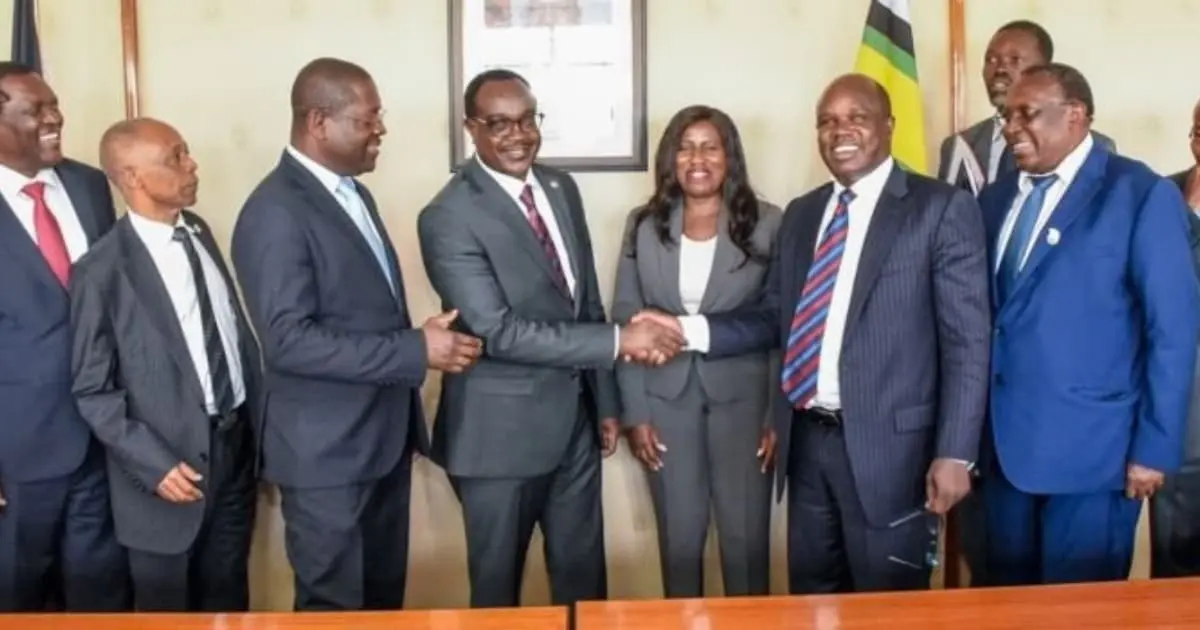
The formal deal is slated to be officially signed on Friday, October 30, 2026, after technical teams finalize harmonizations on how the funds will be distributed across university cadres. The high-stakes negotiations involved key state officials, including Education Cabinet Secretary Julius Ogamba, National Treasury Cabinet Secretary John Mbadi, and Internal Security Principal Secretary Raymond Omollo.
Under the agreed terms, the KSh 20 billion package will cater to basic salary adjustments, house allowances, and historical financial arrears tied to the delayed 2025–2029 Collective Bargaining Agreement (CBA).
The month-long shutdown had paralyzed tertiary learning nationwide, disrupting academic calendars, threatening graduation schedules, and provoking street demonstrations from students demanding an immediate return to class.
The 2026 industrial action forms part of a decades-long struggle over remuneration, academic freedom, and state funding in Kenya’s public higher education system. Although academic agitation began decades prior, UASU operated under strict government resistance until gaining full legal recognition, after which it launched a monumental nine-month strike in 2003 that yielded a historic 116% salary increase and established the union as a formidable advocate for faculty welfare.
Over the years, structural funding gaps led to repeated friction, most notably in 2017 when public universities suffered three separate strikes in a single calendar year over delays in executing the 2013–2017 CBA and negotiating subsequent wage structures.
The immediate roots of the present agreement trace back to October 2, 2026, when lecturers walked off the job following the expiration of a seven-day strike notice. Union leaders accused the Ministry of Education, the National Treasury, and individual University Councils of failing to honor previous Return-to-Work formulas and dragging their feet on a viable counterproposal for the 2025–2029 negotiation cycle.
After rejecting an initial 4% annual increment proposal from the state as insufficient to offset rising inflation, the union maintained a total paralysis of learning until the government assembled the KSh 20 billion allocation.
While the pending sign-off offers immediate relief to higher education, stakeholders emphasize that long-term stability requires predictable Treasury disbursements to prevent recurring industrial action.